•    
  • Language

When research reaches the mine — and delivers results

Day-to-day operations demand answers right here, right now. Research can take several years. But what happens when new knowledge makes its way into production? At Boliden and Aitik , several years of studies have already been put into practice, and delivered concrete results.

In mining, production must run smoothly, and problems that arise require quick solutions. But some issues are more complex and take time to resolve. That’s why collaboration with the research community is a crucial piece of the puzzle for Rasmus Tammia, head of Boliden’s AI program. 

“Research gives us the freedom to delve into more complex issues without always knowing exactly where it will lead. The results can build knowledge that will be important down the road and create value for the business today,” he says.  

The AI program conducts research and development in industrial AI, with a focus on our core business and the people who work there. But to build knowledge for the future, expertise and perspectives from outside the company are also needed.


How WASP creates a platform for research

The research community offers expertise that isn’t always available in industry. That’s why Boliden is participating in WASP, the largest individual research program in Sweden in modern times. This national initiative brings together research and skills development in areas such as AI, autonomous systems, and software. 

For Rasmus, participation is not just about the studies themselves. Through WASP, researchers, universities, and companies from various industries come together to exchange knowledge and forge new collaborations. 

“It’s a really great network where we learn from one another and see that companies in very different industries often face similar challenges,” he says.


A bridge between research and industry 

When long-term research makes a tangible difference in operations, the connection between universities and industry becomes clear. One example is Frida Norlund, an industrial Ph.D. student in control engineering at Lund University and an employee here at Boliden. 

Frida Norlund devotes 80% of her time to her doctoral studies and the remaining 20% to working as an engineer. Among other things, she works on operational support and improvements to the flotation control system. 

“For me, it’s been important that what I do can be applied in practice. I want to see what problems we’re solving and what purpose it serves in the operation. I want my research to exist in the space between academia and industry,” says Frida.  
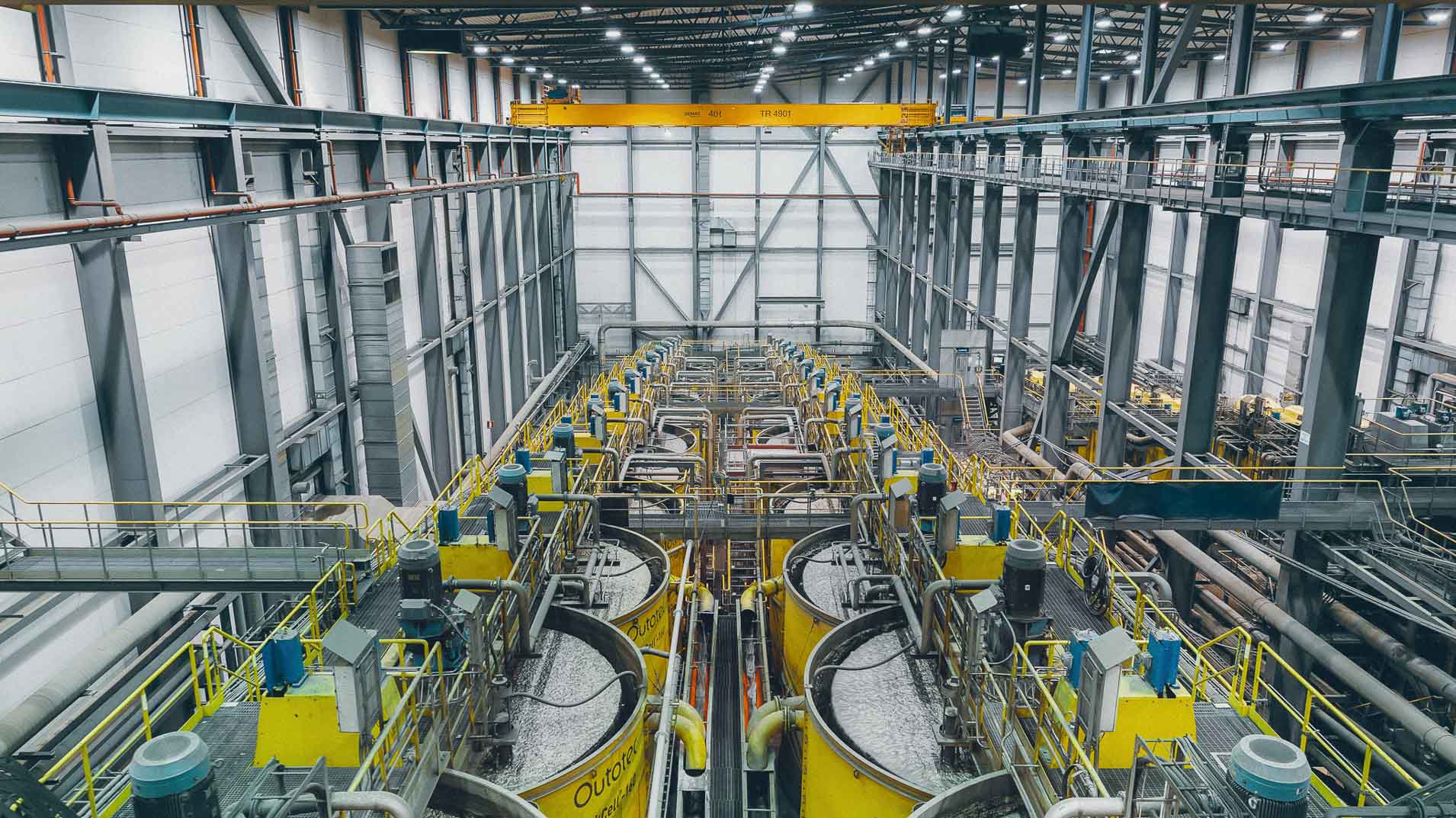
Her research focuses on advanced process control in the flotation process at the Boliden Aitik copper mine. Simply put, flotation is the process by which copper is separated from the rest of the ore. The ground ore is mixed with water and chemicals so that the copper particles can be carried to the surface by air bubbles and be recovered. 

For the process to work, the levels in the large flotation tanks, among other things, need to be kept stable. Frida compares the control technology to a car’s cruise control: the operator determines how the process should behave, and the control system helps keep it there. But what happens when the flow suddenly changes? That is one of the challenges she has investigated more closely.
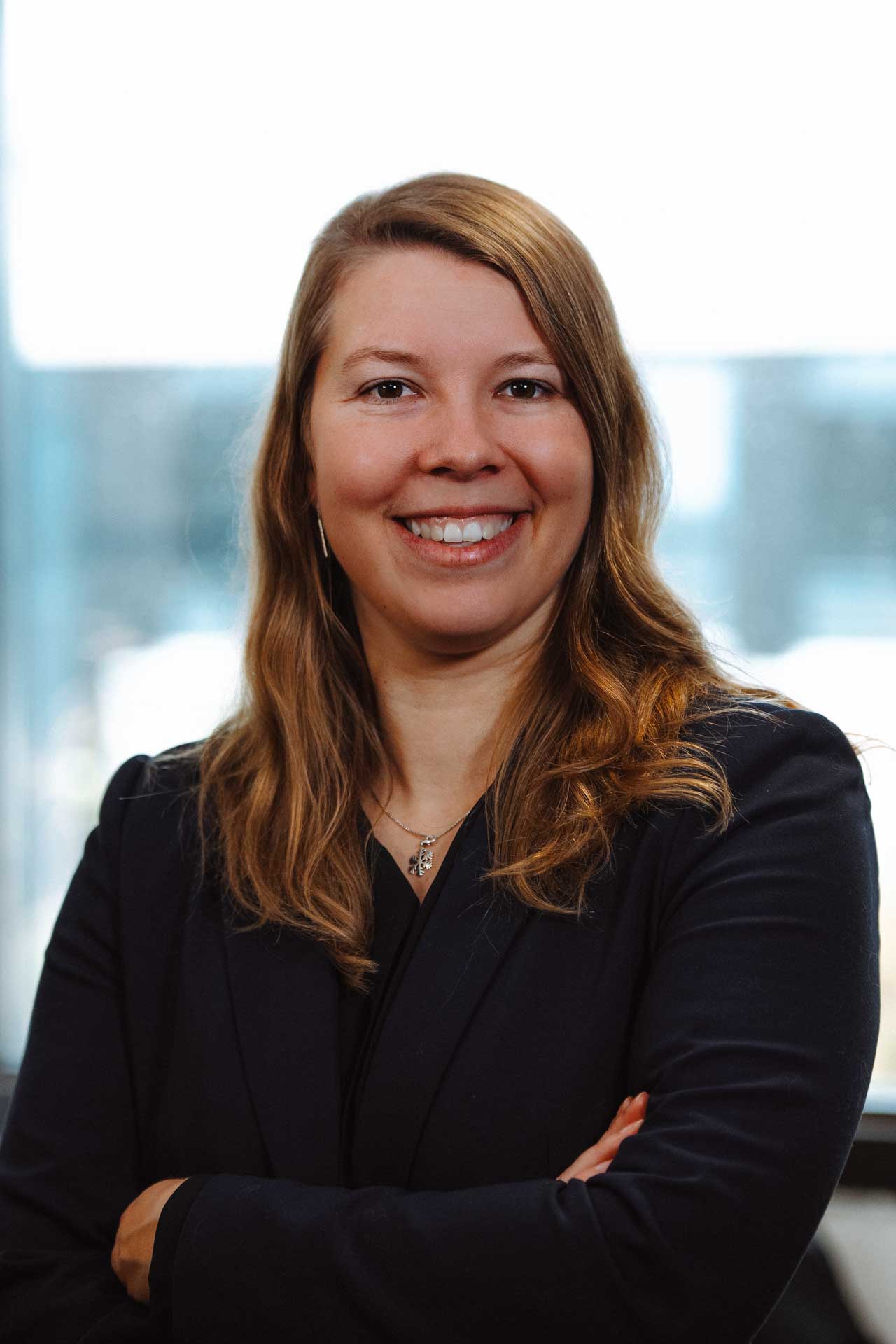
“My goal has always been to keep my research closely connected to day-to-day work so it can be put into practice”

When research becomes reality 

At Boliden Aitik, there are large mills that grind the ore before it moves on to the flotation tanks. If the mills suddenly stop or restart, it can create disturbances that cause the levels in the tanks to fluctuate. This, in turn, affects both the quantity and quality of the final product. 

Frida therefore investigated how the control of the flotation process could be better coordinated to reduce the effects of these disruptions. The results have gone all the way from research to actual operation, and the new control system is now implemented at Boliden Aitik. 

“It feels great! My goal has always been to keep my research closely connected to day-to-day work so it can be put into practice,” she says. 

The difference is also noticeable for the operators. With the new control system, the process remains more stable and requires less attention when a mill stops or starts. 

“When a mill stops, the operators don’t have to focus as much on the flotation process to keep it under control. Now that it’s performing much better, they can focus more on other things, like resolving the stoppage,” says Frida.

Value beyond a single result 

Research does not always deliver immediate results. Unlike operational development projects, which are often designed to solve a specific problem, research can delve deeply into an issue over the course of several years. 

For us at Boliden’ , it’s therefore about managing two things at once: developing the business here and now, and building knowledge for the future. 

“We need to have this long-term perspective. You can’t just focus on the short term,” says Rasmus. 

At the same time, Frida’s work shows that the line between research for the future and practical benefits today isn’t always so clear. What begins as a research question can eventually become part of day-to-day operations—and sometimes it happens faster than expected.

The recipe for successful AI implementation

How do you introduce AI in a way that creates real value and earns trust? In this conversation, Rasmus Tammia, Head of Boliden Mines AI Program, and external AI expert Magnus Gens discuss the lessons learned from implementing AI in mining operations, and why successful adoption is driven as much by people and culture as by technology.

Related Content

How AI can improve truck maintenance in Aitik

2026-09-24

How AI can improve truck maintenance in Aitik

Every year, over 40 million metric tons of ore are transported through the Aitik mine – a task that takes a heavy toll on the mining trucks’ beds. How can damage be detected in time and maintenance planned more effectively? In an ongoing project, we’re exploring how AI and computer vision can be part of the solution.

  • Innovation
  • Production
Boliden and Thomas Concrete Group in deepened research collaboration

2025-04-08

Boliden and Thomas Concrete Group in deepened research collaboration

Boliden and Thomas Concrete Group have signed a long-term research and development agreement aimed at developing and optimizing an alternative binder for concrete, based on the SCMentum product concept developed by Boliden.

  • Innovation
  • Products
  • Production
  • Sustainability
Collaboration for e-waste circularity in telecom industry

2025-04-02

Collaboration for e-waste circularity in telecom industry

Boliden is collaborating with IVL Swedish Environmental Research Institute and Ericsson to enhance the visibility of circular electronic waste management in the telecom industry. Their joint efforts aim to accelerate the transformation of Swedish industry toward achieving net zero emissions. This initiative is supported by Sweden's innovation agency, Vinnova, as part of a Net Zero Industry Programme.

  • Innovation
  • Smelters
  • Sustainability
Boliden and Skanska collaborate for circular cement replacement

2025-03-11

Boliden and Skanska collaborate for circular cement replacement

Boliden is initiating a collaboration with Skanska Industrial Solutions aimed at developing the use of Boliden's cement replacement product (SCM), which largely consists of residual materials from Boliden's copper production, for applications in the construction industry.

  • Innovation
  • Production
  • Sustainability
Moving closer to fossil-free mining underground

2025-02-05

Moving closer to fossil-free mining underground

Leading the way toward the fossil-free mining of the future, Frida Pettersson is pioneering efforts 750 meters underground at the Kristineberg mine.

  • Automation
  • Innovation
  • Safety
Future of metal and mining: Boliden launches Low-Carbon Nickel

2024-03-19

Future of metal and mining: Boliden launches Low-Carbon Nickel

Boliden increases the Green Transition Metals portfolio launching Low-Carbon Nickel. The new product further boosts Boliden's collection of low-carbon offerings, joining current portfolio members Low-Carbon Zinc, Recycled Zinc, Low-Carbon Copper, Recycled Copper, Low-Carbon Lead, Recycled Lead & Low-Carbon Sulphuric Acid.

  • Innovation
  • Products
  • Sustainability

Contact

Boliden Head Office

Boliden Group
Klarabergsviadukten 90
P.O. Box 44, SE-101 20 Stockholm 
Tel: + 46 8 610 15 00
Fax: + 46 8 654 80 90